
07/10/2022
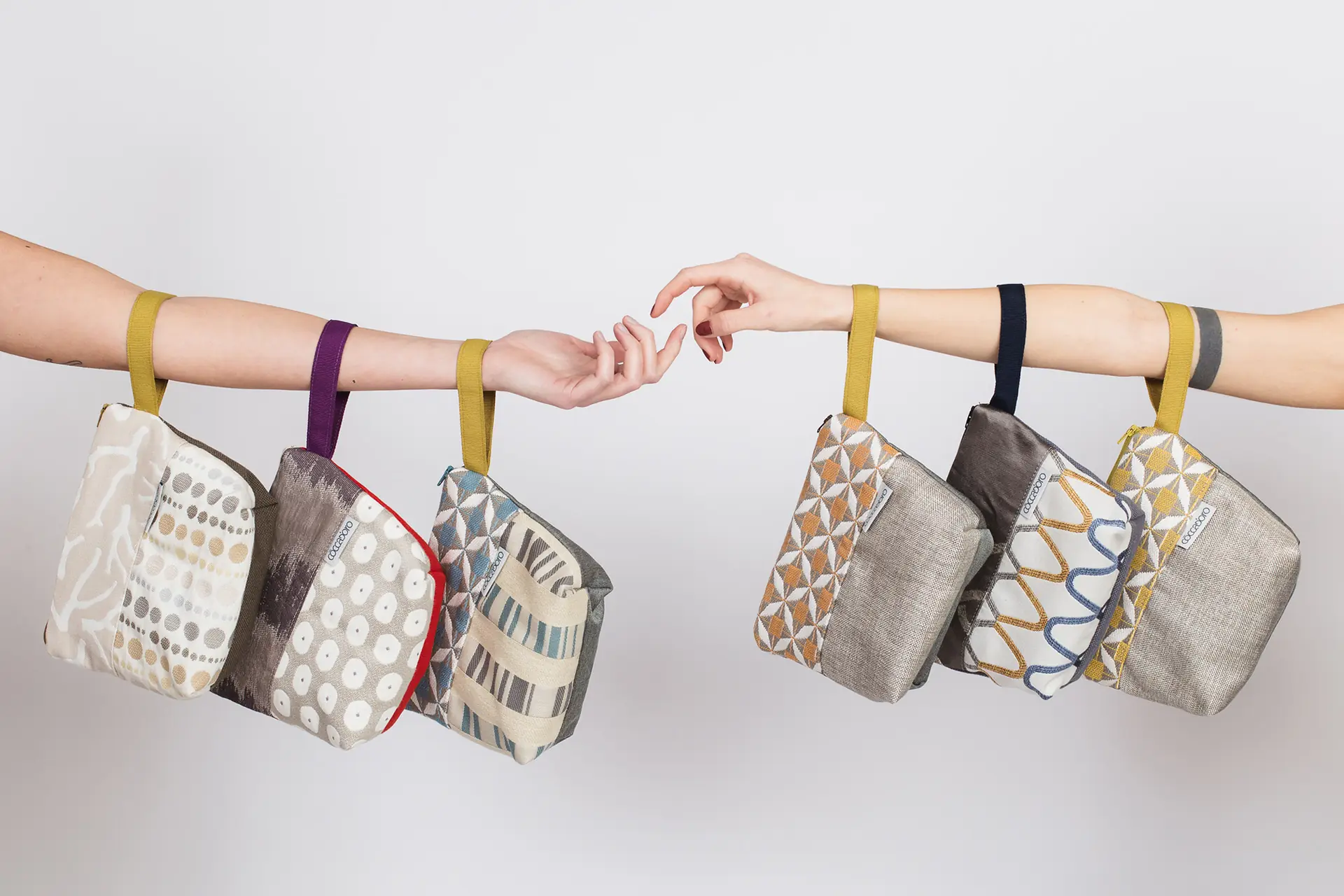
Circular Srl supported Coccadoro in assessing two products a clutch bag and a backpack by analysing materials, sourcing, and artisanal manufacturing processes. The project quantified the climate impact of the life cycle stages considered and collected relevant data to document material recovery. This approach connects the brand’s production choices with environmental communication based on measurable results.
Who is Coccadoro?
Coccadoro is a Palermo-based artisanal brand specialising in bags and accessories, founded during the pandemic by four women: Roberta, Christine, Anna, and Daniela. The cooperative gives new life to textile production waste, discontinued fabric samples, and surplus stock, transforming them into products designed and manufactured in Sicily.
The brand embraces three core values: Sustainable, Socially Responsible, and Sicilian. The availability of recovered materials inspires the creation of capsule collections and small production runs. The same design can be reproduced using different fabrics and components, resulting in unique pieces. The workshop collaborates with local artisans and also reuses cutting scraps to produce components for smaller accessories.
Collaboration with Circular Srl
The collaboration with Circular enabled Coccadoro to complement its artisanal production practices with a scientific assessment of the climate impact of two products: a clutch bag and a backpack.
Using the Life Cycle Assessment (LCA) approach, the study examined the materials used, transportation associated with sourcing, and energy consumption during assembly and sewing. This analysis identified the main contributors to greenhouse gas emissions and potential opportunities for improvement.
For the clutch bag, the assessment revealed a climate impact of 0.34 kg CO₂ equivalent per product, considering the life cycle stages analysed and excluding the use and end-of-life phases.
The project also assessed the role of recovered materials by comparing the products with an alternative production scenario based on virgin materials. Furthermore, it provided the basis for developing Type II environmental labels and self-declared environmental claims concerning recycled content, in accordance with ISO 14021.
The recovery of textile waste and surplus stock directly contributes to Sustainable Development Goal 12 (SDG 12) of the United Nations 2030 Agenda, which promotes responsible consumption and production.
Circular's consultancy thus connects production choices with measurable and documented environmental information, helping to prevent greenwashing through specific, transparent, and clearly defined environmental claims, limited to the aspects actually assessed.
This approach is aligned with the objectives of EU Directive 2024/825, which aims to protect consumers against misleading environmental claims and promote more transparent
and reliable sustainability communication.


